GitHub secret scanning now flags Lovable and Supabase tokens
A repo-audit checklist for indie teams using Lovable, Supabase, Logfire, or Pydantic AI Gateway.
Short answerIf you use Lovable, Supabase, Logfire, or Pydantic AI Gateway, audit and rotate alerted repo secrets now.
By JasonPublished Oct 6, 2026Last verified Oct 6, 20264 min read
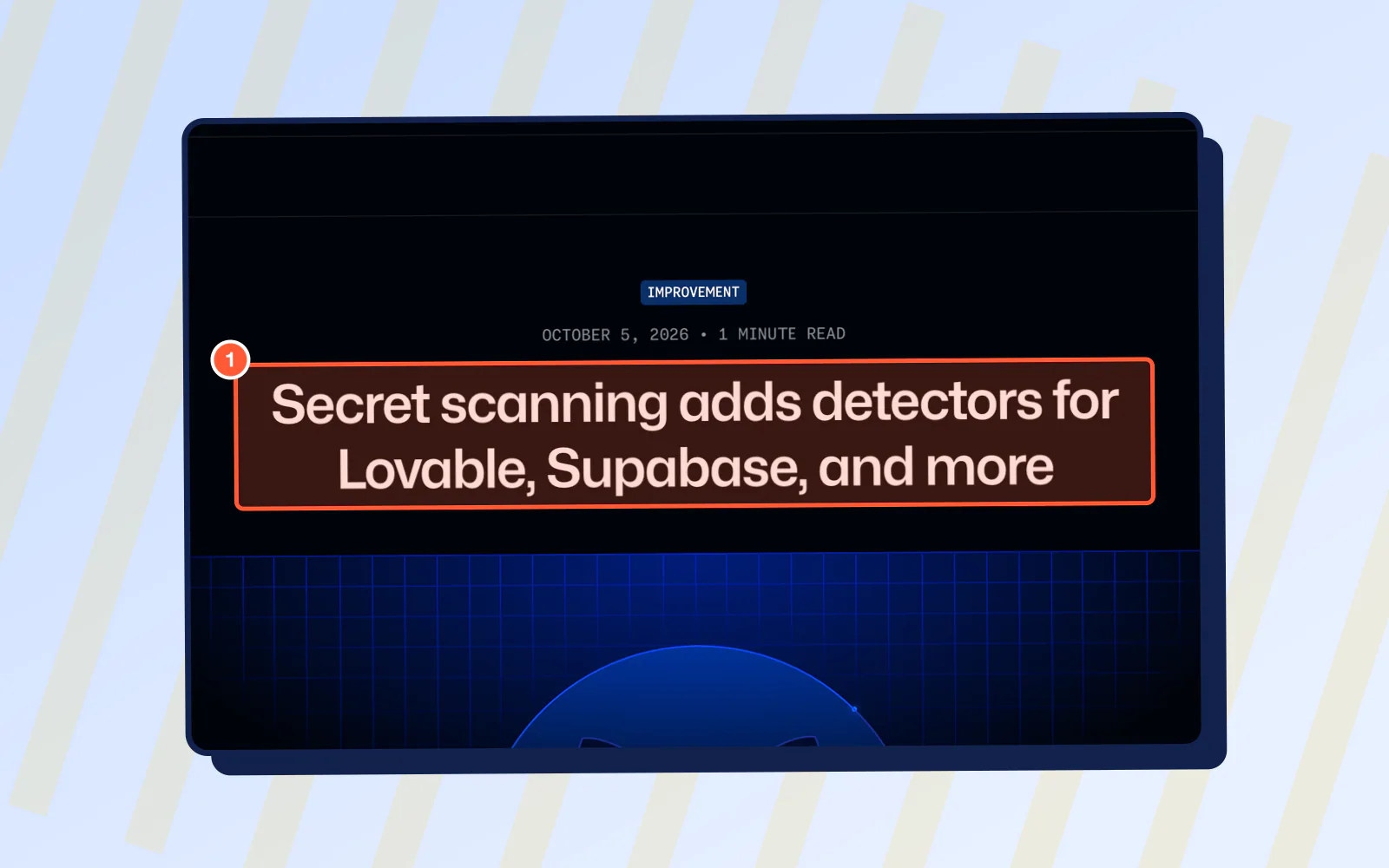
Indie teams often ship quickly with a small number of repositories, a growing stack of hosted tools, and not much time for credential hygiene. GitHub’s October 5 changelog adds a practical question: if your codebase or docs ever contained Lovable, Supabase, Logfire, or Pydantic AI Gateway credentials, what should you check now?
The change does not mean every exposed token has already been abused, and it does not replace a real secrets-management process. It does mean GitHub has added detectors for several token types that are plausible in modern AI-app and backend workflows: Lovable API keys, Pydantic Logfire tokens, Pydantic AI Gateway API keys, Supabase OAuth access tokens, and Supabase scoped personal access tokens. According to GitHub Changelog, Lovable Labs has also joined GitHub’s secret scanning partnership program, so Lovable secrets found in public repositories can be forwarded to the issuer for revocation or rotation before abuse.
The decision for a small team is therefore not “is GitHub secret scanning enough?” It is: which repositories should we audit first, which alerts deserve immediate rotation, and which tokens should no longer live near source code at all?
What changed
According to GitHub Changelog, secret scanning added detectors for these secret types:
- Lovable Labs: `lovable_api_key`
- Pydantic Services Inc.: `logfire_token`
- Pydantic Services Inc.: `pydantic_ai_gateway_api_key`
- Supabase: `supabase_oauth_access_token`
- Supabase: `supabase_scoped_personal_access_token`
GitHub Changelog also says Lovable Labs joined GitHub’s secret scanning partnership program. When one of Lovable’s secrets is found in a public repository, GitHub says it forwards the secret to the partner so the credential can be revoked or rotated before abuse.

What to rotate or protect first
Start with repositories that match one of these patterns:
- Apps built with Lovable or connected to Lovable APIs.
- Projects using Supabase authentication, management, or scoped personal access tokens.
- Python or AI-agent projects using Pydantic Services tokens, including Logfire or Pydantic AI Gateway.
- Public repositories that may contain examples, `.env` files, setup screenshots, generated config, or old prototype commits.
- Private repositories where user-secret alerts appear, because GitHub says user secrets can generate alerts in public or private repositories.
If GitHub raises an alert for one of the listed token types, the safe operational move is to rotate that credential and remove the source of the leak. Do not treat alert closure as the same thing as changing the token at the provider.
What this does not prove
This is a detector update, not evidence that the listed providers are insecure. The changelog does not say these tokens are more commonly leaked than others, nor does it provide abuse rates, false-positive rates, or remediation timelines.
It also does not say Supabase or Pydantic Services joined the partner program in this update. The only new partner named in the supplied source is Lovable Labs. For the other listed token types, the concrete takeaway is narrower: GitHub says it can now automatically detect them and generate secret scanning alerts when found.
Benchdict checklist
- Add the five named secret types to your internal credential inventory.
- Review recent public commits and templates for these tokens.
- Rotate any credential that appears in a GitHub secret scanning alert.
- Move tokens out of committed files and into your team’s normal secret store or deployment environment.
- Pay special attention to fast-moving prototype repos, where copied setup values are more likely to be committed.
This is not a reason to rebuild your stack. It is a reason to run a focused cleanup pass while the detector list is fresh.
GitHub’s update is useful because it names concrete token classes, not because it solves secret management by itself. For indie builders, the priority should be boring and immediate: search for the named token categories in repositories, treat any GitHub alert for those tokens as a rotation task, and stop putting these credentials in files that can be committed.
The most notable distinction in the changelog is Lovable’s partner status. GitHub says partner secrets found in public repositories are reported to the issuer, while user secrets generate alerts when found in public or private repositories. That is helpful, but it also creates an easy trap: teams may assume platform detection equals complete protection. It does not say every historical exposure is covered, that private repository use is automatically safe, or that all Supabase and Pydantic tokens will be revoked for you.
Our read: use this as a trigger for a targeted credential cleanup, especially if your team builds with Lovable or Supabase and pushes prototype code quickly.
If you use Lovable, Supabase, Logfire, or Pydantic AI Gateway, audit and rotate alerted repo secrets now.
GitHub’s changelog gives enough detail for a targeted repo audit, but not enough to claim broad safety or risk levels across these providers.
Teams that do not use Lovable, Supabase, Logfire, or Pydantic AI Gateway do not need a special audit from this update alone.
Read next
Follow new articles
Email updates are not live yet, and we are not collecting addresses. To follow new articles, use the RSS feed.